AutoLabs
CONTACT US
THE HARDWARE

AutoVision

An AI fabric inspection unit that attaches to the line you already run. No equipment change - it catches defects before shipment and keeps an inspection record for every roll.

What It Does

See, find, prove.

The unit photographs the whole roll, the AI finds where defects are and what kind they are, and a report is kept for every roll to prove shipped quality. All three happen in one unit.

AutoVision unit
AutoVision

Sees everything

It photographs the full width and full length of the fabric, including small defects the eye easily misses. Because it shoots under the same lighting inside a light-blocking box, results stay steady even when factory lighting changes.

AutoBrics

Finds defects right away

At the same speed the fabric moves, it finds where each defect is and what kind it is. It uses normal fabric as the reference, so there's no need to collect defect photos beforehand.

AutoCertificate

Proves it with records

For every roll, the inspection time, original photos, and defect positions are saved automatically. The 4-Point score buyers use is calculated automatically, so when a claim comes you're talking on the same terms.

Specifications

Key specifications

Standard configuration. Details that depend on fabric width and line layout are confirmed after we see your site.

Cameras and lighting

Cameras
4 line-scan cameras (fixed 523 mm from the fabric)
Inspection coverage
Full fabric width in one pass, full roll length without gaps
Lighting
LED lighting + light-blocking box (keeps outside light out)
Camera height
Motor-adjusted up and down (handles changes in fabric thickness)

Inspection performance

Inspection speed
30 m/min (inspects without slowing the line)
Fabrics supported
Knitted, woven, and dyed fabrics, both solid and patterned
Data to prepare
None (starts from normal fabric samples; no need to collect defect photos)
Grading
Automatic 4-Point score (the ASTM D5430 standard buyers use)

Installation and size

Installation
Attaches to the exit of your existing inspection machine or line (no equipment replacement or modification)
Roll size limit
None (no need to move or rewind rolls)
Extra equipment
None (mounts on the existing frame)
Unit size (W × D × H)
1,700 × 450 × 850 mm
Footprint (with base)
1,800 × 600 mm, total height 1,100 mm
Status display
Power · Run · Alarm lights, inspection window

How It Detects

It learns normal fabric, not defects.

Ordinary AI inspection systems can only start after thousands of defect photos are collected and marked one by one, and they must be taught again whenever a new defect appears. Our unit uses normal fabric as the reference and looks for anything that departs from it, so it catches defects it has never seen. Your staff simply name new defects on the screen.

Starts without defect photos

A few photos of normal fabric are enough. There is no preparation work collecting and marking defect photos.

No re-teaching when fabric changes

When the product changes, only the criteria are adjusted. Stopping the line to re-teach the system is rarely needed.

Records your inspector's judgment

It doesn't replace your inspector - it records why they judged the way they did. Their corrections are reflected in the next inspection.

Typical defects caught, by process

Knitting

  • Broken loops · dropped stitches
  • Needle lines
  • Holes
  • Foreign matter · stray yarn

Weaving

  • Weft · warp faults
  • Broken ends
  • Uneven density
  • Weaving marks

Dyeing

  • Color migration
  • Dye stains · bleeding
  • Shade variation (between rolls · within a roll)
  • Crease marks

These are common examples for each process. How far it actually detects is confirmed after checking with your fabric on site.

What You Get

An inspection record for every single roll.

From installation to records, it all happens on one line. Your plant receives three things.

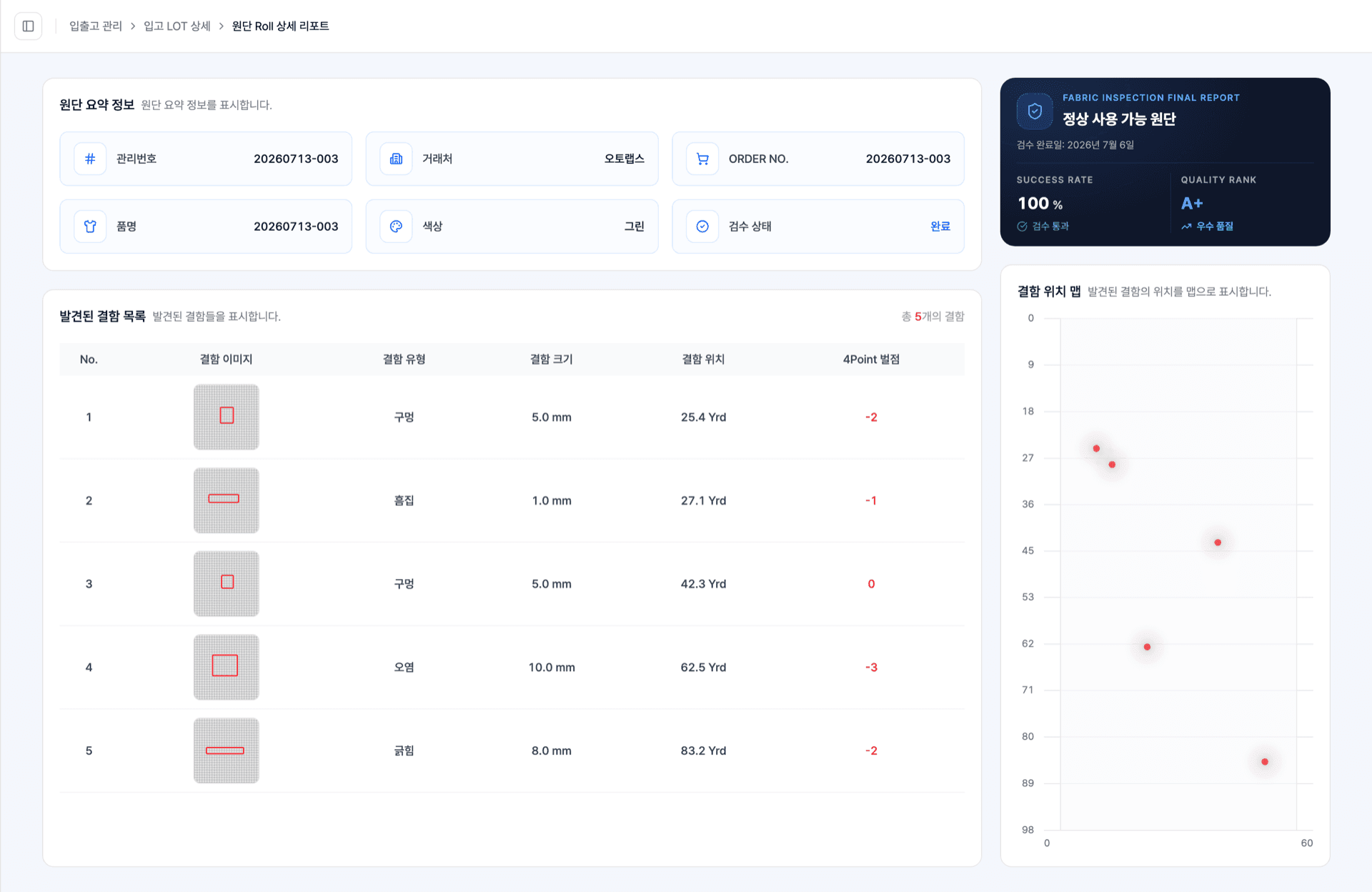
Per-roll inspection report screen - defect list and defect position map
Sample screen; figures are illustrative.

Floor screen

See inspection status right beside the line. When a defect appears, its position and type show up on the spot.

Per-roll inspection report

For every roll: a defect position map, type, size, and 4-Point score. Not a sample - a record of the whole roll.

Claim-defense records

Inspection time and original photos are saved automatically. You can prove "it wasn't there at shipment" and pull it out whenever needed.

AutoCertificate: we send the proof first, on the buyer's own terms

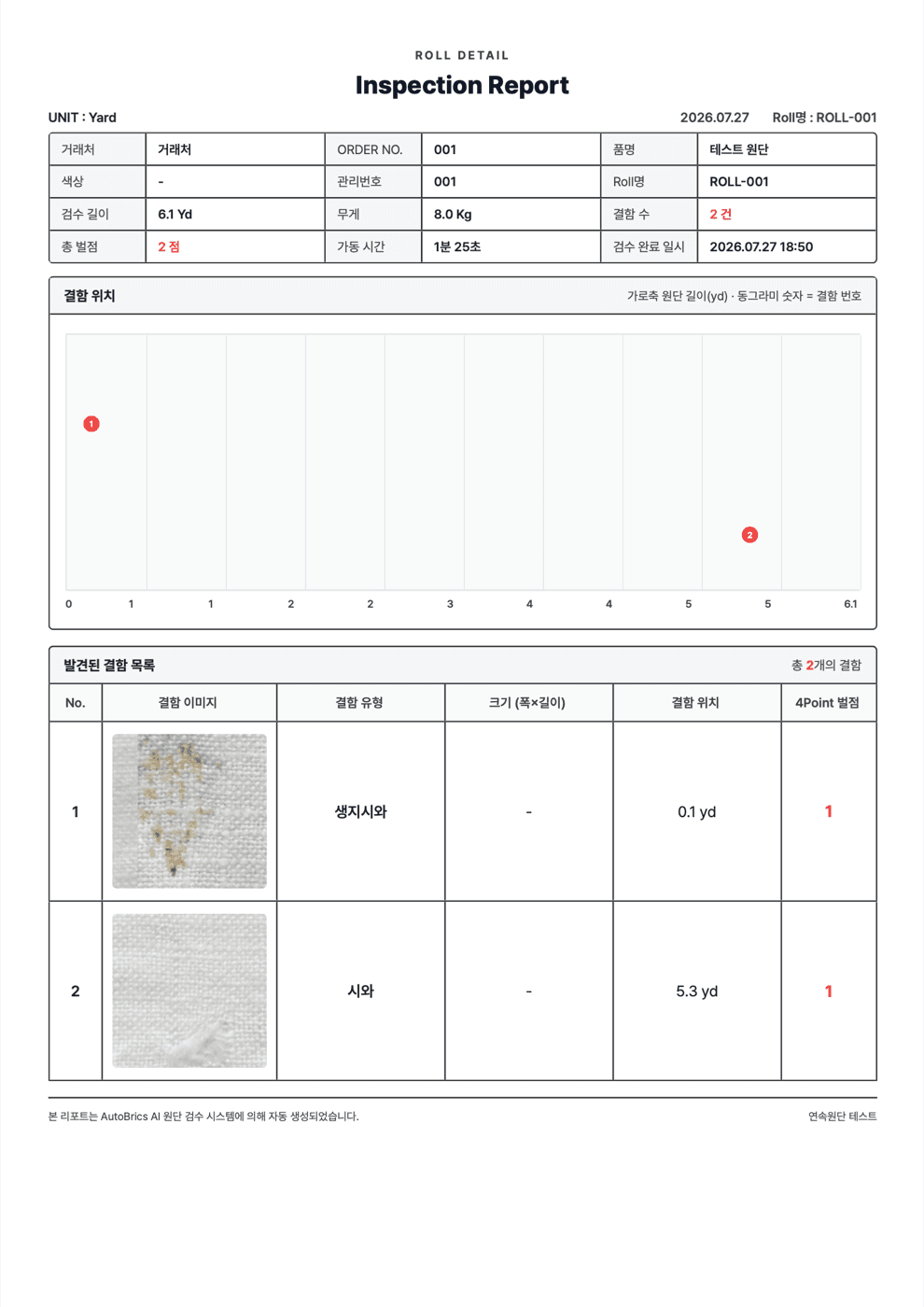
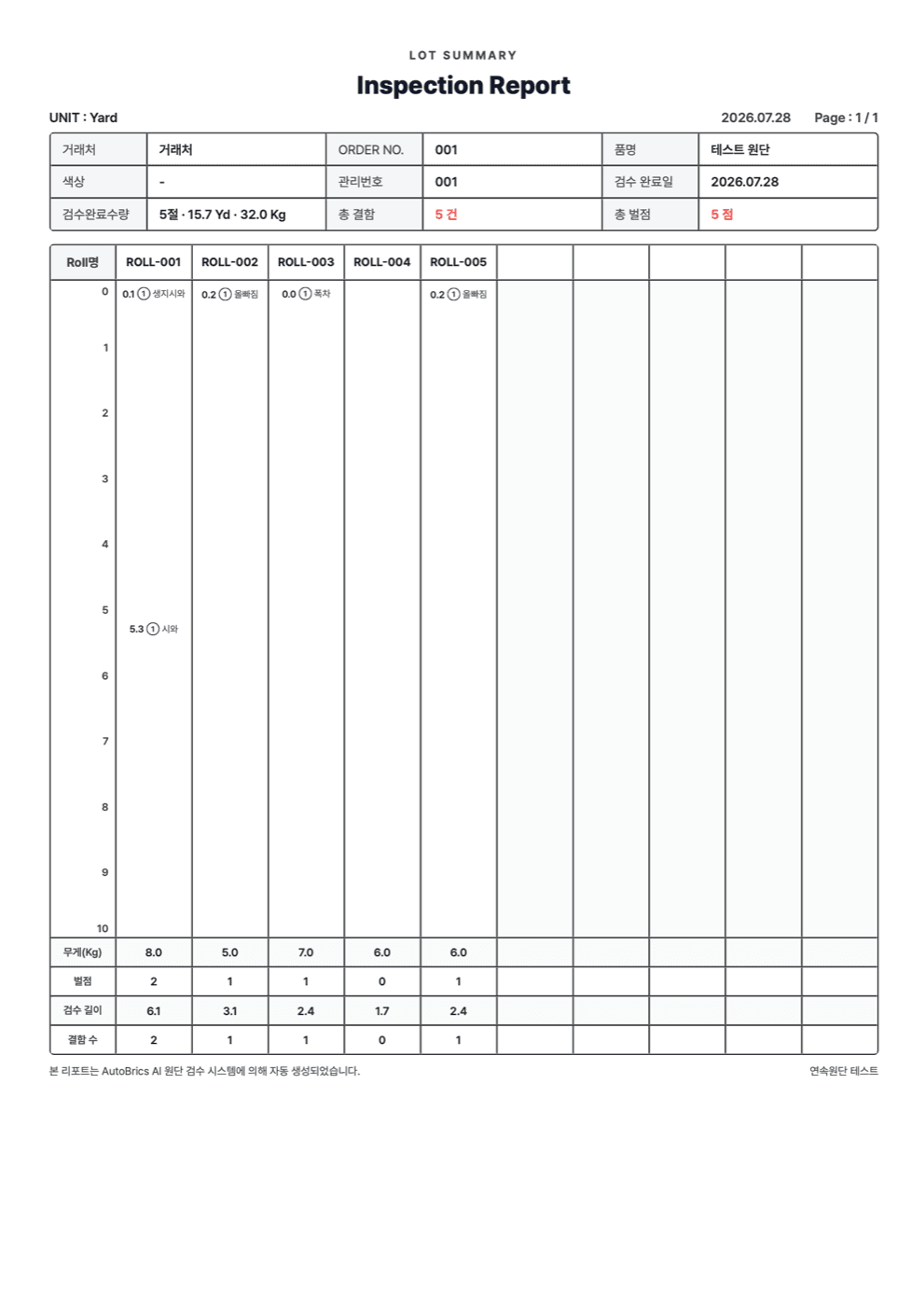
The 4-Point System is the standard buyers and factories use most in the apparel industry to grade fabric (ASTM D5430). Until now, buyers have used it to judge factories. AutoCertificate lets the factory use it first: before shipment, each roll is scored and sent to the buyer as a standard-format quality certificate.

  1. Inspect the whole roll

  2. Calculate 4-Point score automatically

  3. Create the standard certificate

  4. Submit to buyer · original evidence in a dispute

  • Roll inspection report (roll detail)
    Roll inspection report (roll detail)
  • LOT summary report
    LOT summary report

Getting Started

Four steps to deployment - the first is free.

We don't stop or replace the line you're running. The time and terms for each step are confirmed after we see your site.

  1. Site survey

    We check the line layout, fabric types, and how you inspect today. Half a day is enough.

  2. Install and tune

    We install the cameras and lighting and set the criteria for each fabric.

  3. Build up data

    Normal and defect data accumulate, with your inspector's feedback included.

  4. Run the reports

    Per-roll reports and certificates go into regular use, ready for claim defense.

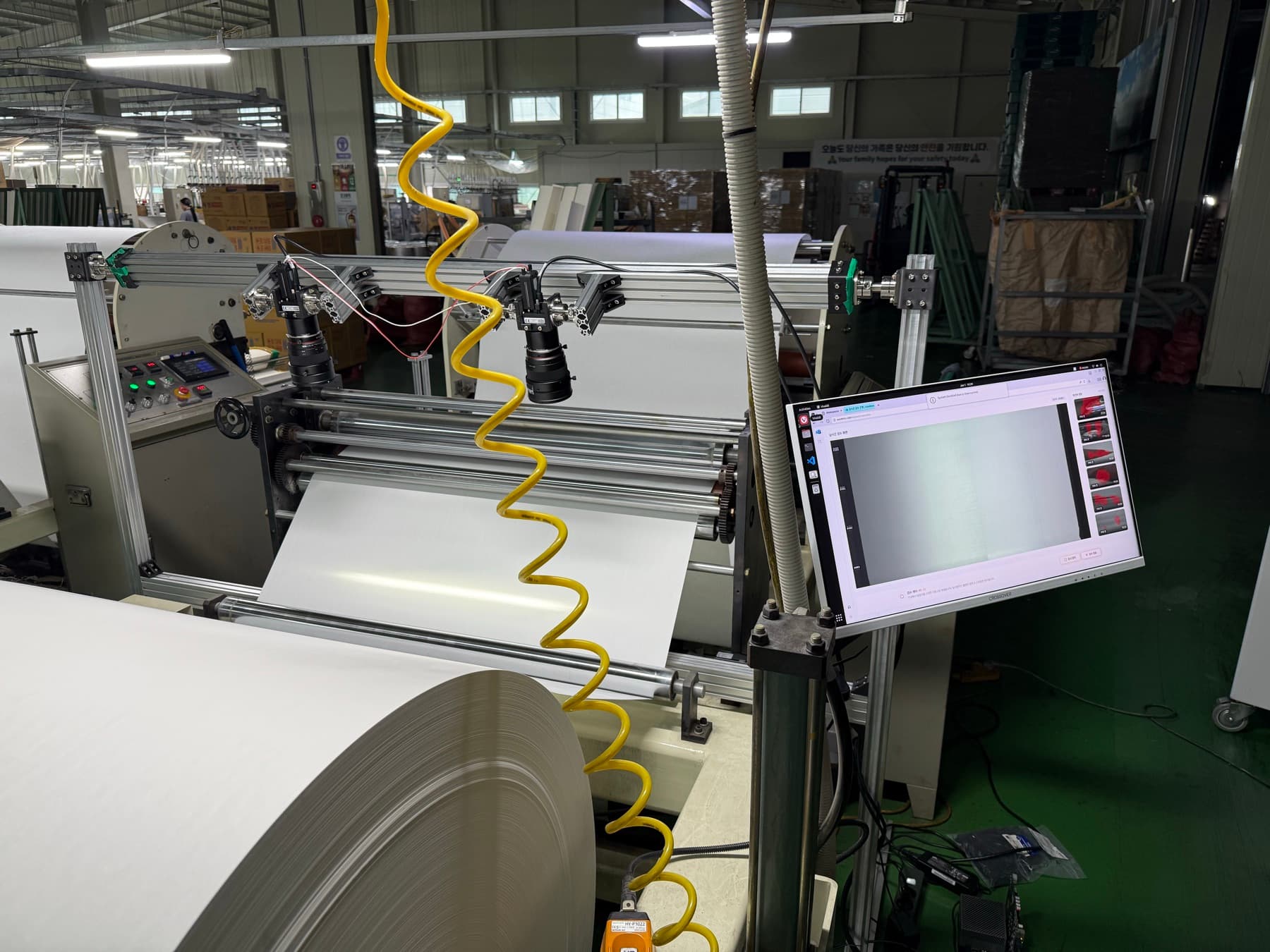
Validation statusProof-of-concept deployments are running on a pulp line and a fabric line in Korea.

On site

  • Inspection cameras and floor screen installed on a pulp line
    Inspection cameras and floor screen installed on a pulp line
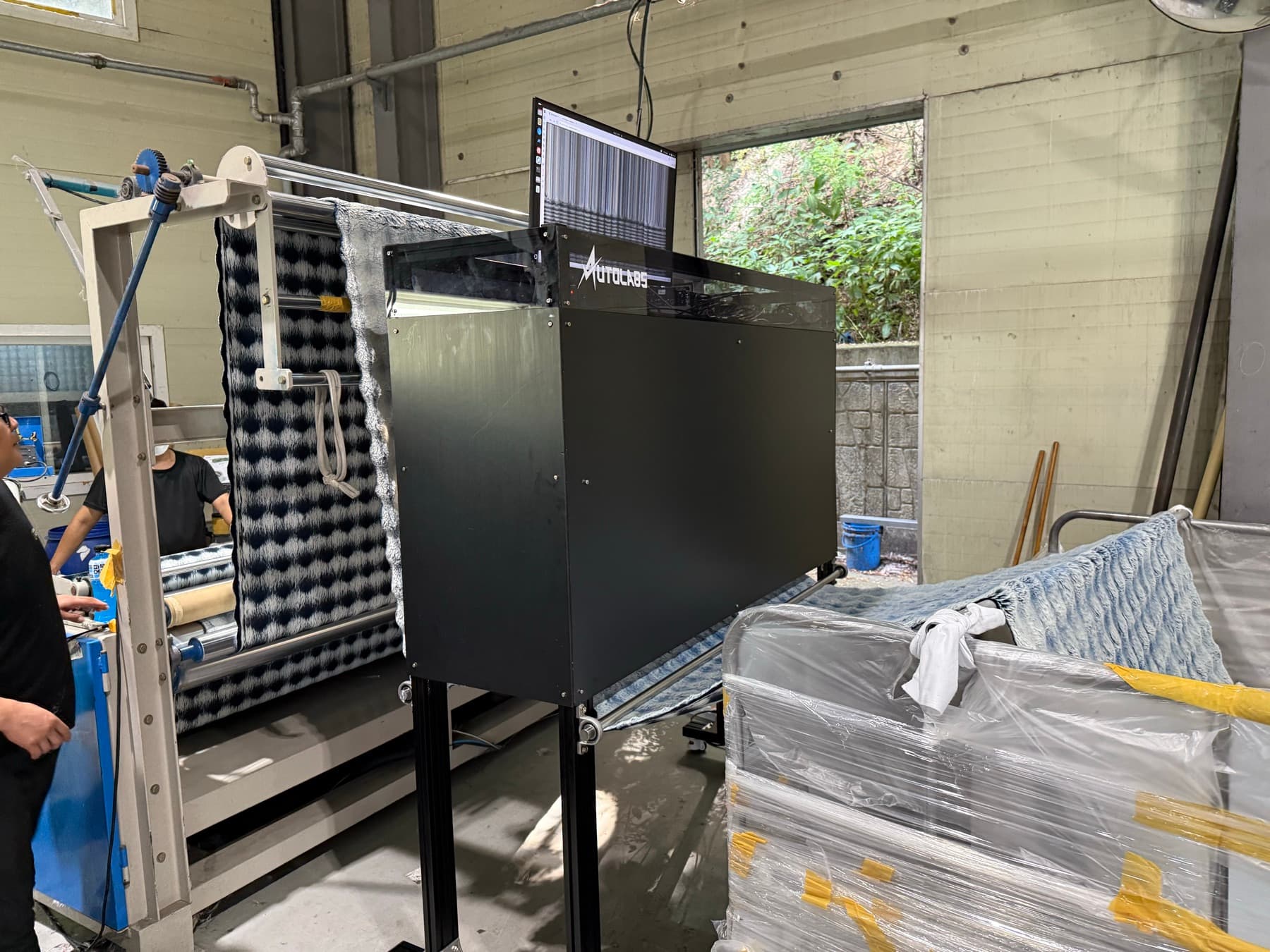
  • AutoVision installed at the entry of a fabric line
    AutoVision installed at the entry of a fabric line
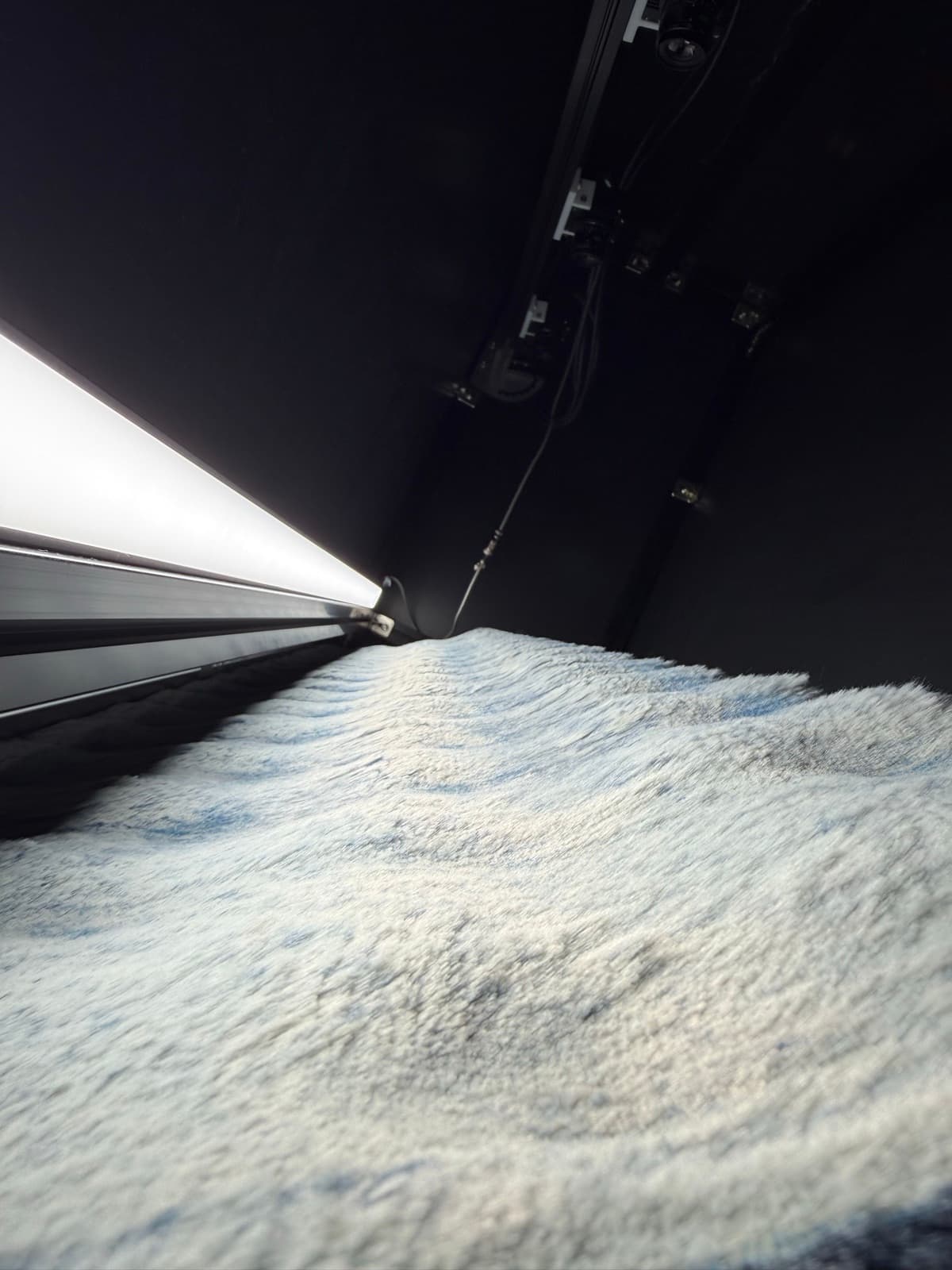
  • Inside the box - fabric passing under the LED lighting
    Inside the box - fabric passing under the LED lighting

Frequently asked questions

AutoVision is an AI inspection unit for roll materials such as fabric, paper, and film. Deployment terms and specifications are confirmed for your line after we see your site.

Do I have to replace my current inspection machine?

No. The camera, lighting, and reading unit attach to the inspection machine or line exit you already use. No equipment change or modification, no line stoppage - a short installation and it's running.

Do I need to collect defect photos beforehand?

No. It starts with normal fabric samples only. There is no preparation work collecting and marking thousands of defect photos, and defects it has never seen are caught as anything different from normal. Your staff name new defects right on the screen.

Which fabrics and processes can it handle?

Knitted, woven, and dyed fabrics, both solid and patterned. We are also expanding to other roll materials such as paper and film. How far it actually detects is confirmed after checking with your fabric on site.

How do I receive the inspection results?

As a floor screen beside the line, a per-roll inspection report (defect position map, type, size, 4-Point score), and claim-defense records with inspection time and original photos attached. It can also be issued as a standard certificate for your buyer.

What about price and deployment time?

They depend on line layout, fabric width, and inspection conditions, so we propose them in writing after seeing your site. The first step, the site survey, takes half a day and is free. There are two options: purchase the unit, or pay a monthly fee with no upfront cost (HaaS).

I'd like to know how much my plant is losing first - where do I start?

With the Defect Loss Calculator, enter your monthly claim count and average loss per claim to see annual losses and the amount you could prevent right away. Leave the 5-minute pre-assessment survey and we'll bring an analysis based on your numbers to the first meeting.

We'll check first whether it fits your line.

In a half-day site survey we look at your line layout, fabric types, and how you inspect today, then propose a written validation plan based on your fabric.